Buy tv-soundbar.eu ?
We are moving the project
tv-soundbar.eu .
Are you interested in purchasing the domain
tv-soundbar.eu ?
domain@kv-gmbh.de · 0541-91531010
Buy tv-soundbar.eu ?
What are conjunctional clauses, relative clauses, demonstrative clauses, and infinitive clauses?
Conjunctional clauses are dependent clauses that are introduced by a conjunction, such as "because," "although," or "while." They provide additional information about the main clause in a sentence. Relative clauses are also dependent clauses that provide more information about a noun in the main clause. They are introduced by relative pronouns like "who," "which," or "that." Demonstrative clauses are dependent clauses that function as adjectives and provide more information about a noun in the main clause. They are introduced by demonstrative pronouns like "this," "that," "these," or "those." Infinitive clauses are dependent clauses that are formed with an infinitive verb (to + base form of the verb). They can function as nouns, adjectives, or adverbs in a sentence. **
Are conjunctive clauses always adverbial clauses?
No, conjunctive clauses are not always adverbial clauses. While adverbial clauses are a type of conjunctive clause that function as adverbs to modify verbs, adjectives, or other adverbs, there are also other types of conjunctive clauses. For example, there are conjunctive clauses that function as noun clauses, such as in "I know that you are busy." In this sentence, "that you are busy" is a conjunctive clause functioning as a noun clause, not an adverbial clause. Therefore, conjunctive clauses can serve various grammatical functions beyond just adverbial clauses. **
Similar search terms for Clauses
Top-Angebote
Products related to Clauses:
-
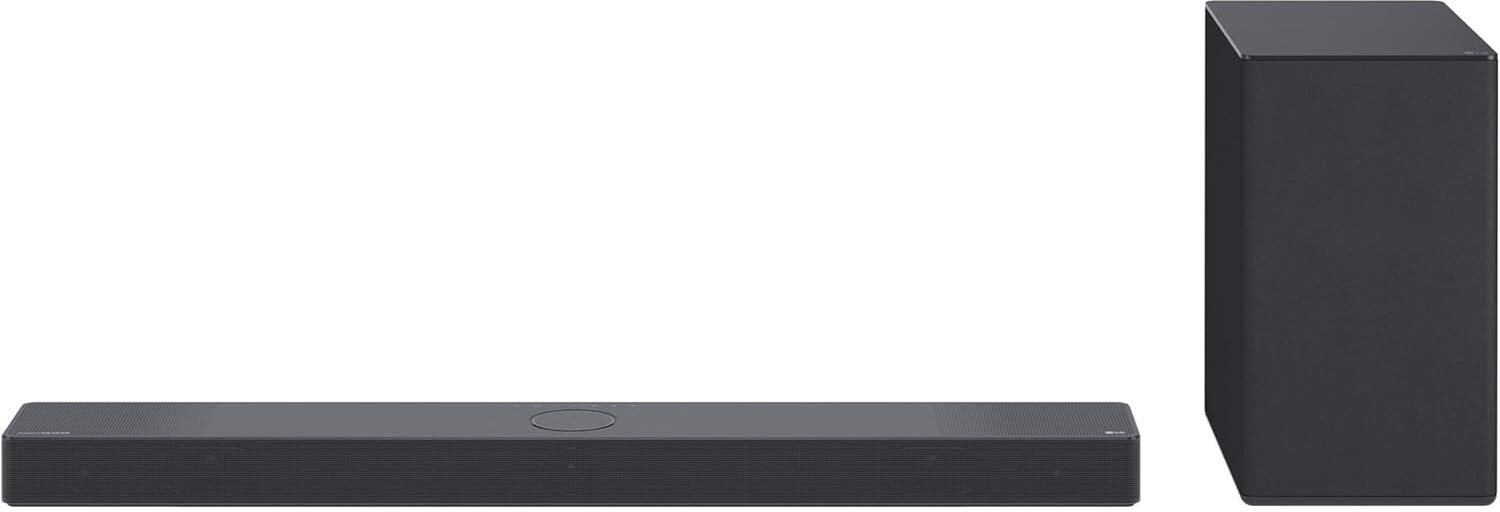
LG USC9S 3.1 Channel Bluetooth Soundbar – Dolby Atmos, Wireless Subwoofer, TV Audio System, New (Unsealed)Overview: The LG USC9S is a premium 3.1.3 channel soundbar designed to deliver immersive audio experiences. Featuring Dolby Atmos and DTS:X support, it creates a dynamic soundstage that brings movies, music, and games to life. The included wireless subwoofer adds deep bass, enhancing the overall audio performance. Key Features: 3.1.3 channel configuration delivers clear dialogue and immersive surround sound Dolby Atmos & DTS:X for cinematic audio with overhead sound effects Wireless subwoofer for rich, deep bass without extra wiring Bluetooth connectivity for wireless music streaming IMAX Enhanced Audio for high-resolution sound quality AI Room Calibration automatically adjusts sound settings to your room’s acoustics Sleek wall-mountable design complements your TV setup Product Description: The LG USC9S soundbar provides exceptional audio quality with its advanced 3.1.3 channel setup and support for Dolby Atmos and DTS:X. The wireless subwoofer enhances bass depth for a fuller sound experience. Stream your favourite music easily via Bluetooth, and enjoy high-resolution audio with IMAX Enhanced technology. AI Room Calibration optimizes sound based on your room environment. Its modern, wall-mountable design fits seamlessly into any home entertainment setup.699,00 £*Shipping: 0,00 £Secure redirect to the provider
-
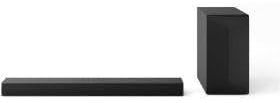
LG SQC1 2.1 Soundbar with Wireless Subwoofer BlackCompact 2.1 soundbar system delivering 160W total power with wireless subwoofer for enhanced bass and depth. Features Dolby Digital sound enhancement, Bluetooth 4.0 connectivity, and multiple input options including optical and aux-in. Includes 1-year manufacturer guarantee.150,49 £*Shipping: 0,00 £Secure redirect to the provider
-
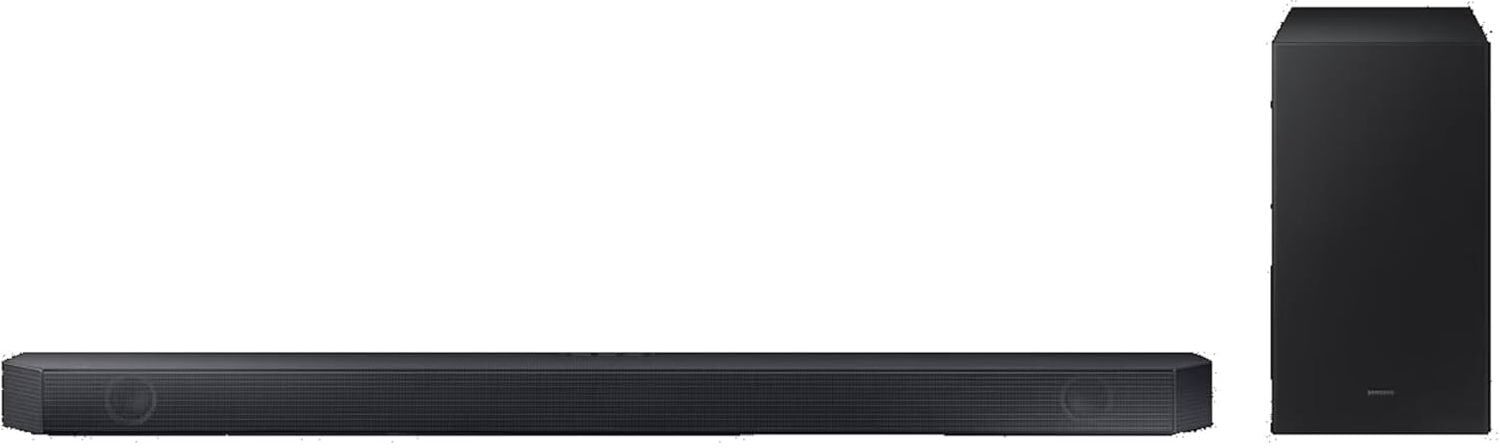
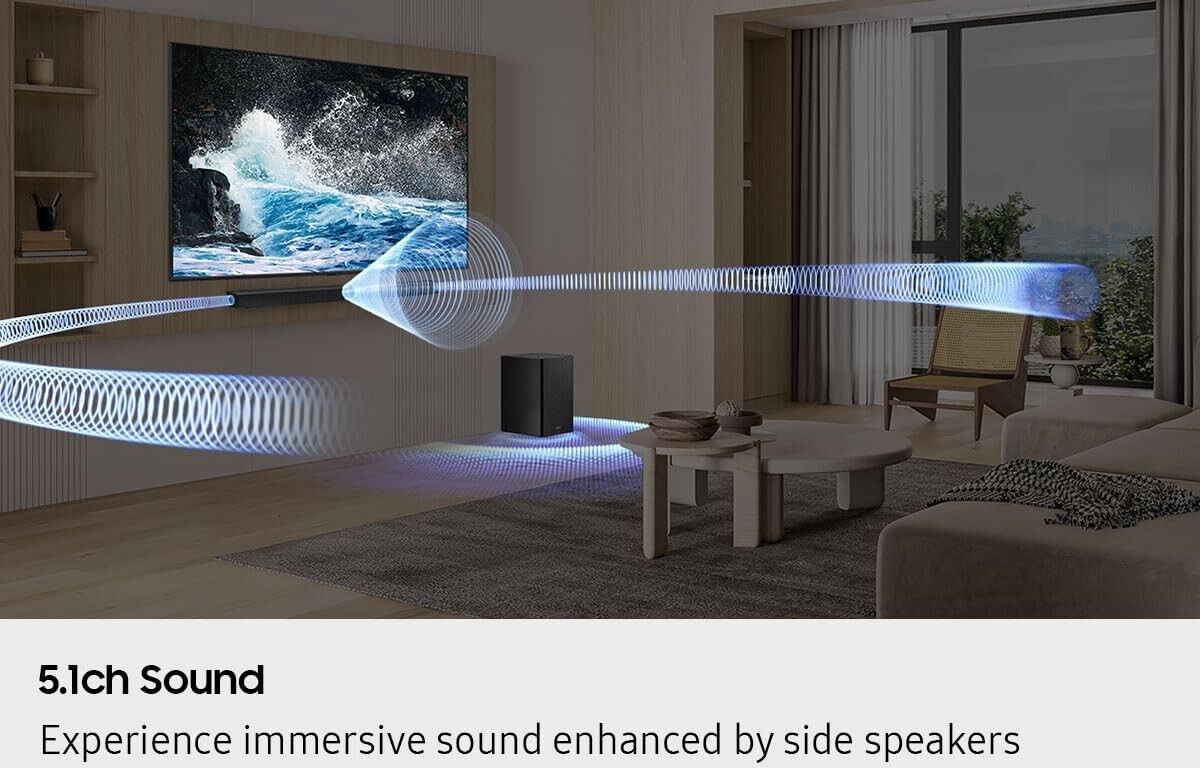
SAMSUNG HW-B750F 5.1ch Soundbar with Wireless Subwoofer BlackDescription The Samsung HW-B750F is a powerful 5.1 channel soundbar system designed to deliver an immersive audio experience for movies music gaming and television. With six built in speakers and a wireless subwoofer it provides room filling sound with enhanced bass and clear dialogue. Dolby Audio 5.1ch and DTS Virtual help create a more immersive surround sound experience, while Samsung's Adaptive Sound automatically optimises audio according to the content being watched. Dedicated sound modes including Bass Boost Game Surround Sound Expansion and Standard provide flexible listening options. Samsung Q-Symphony allows the soundbar to work together with compatible Samsung TVs for a more integrated audio experience. The wireless subwoofer can be positioned separately from the soundbar without requiring a wired audio connection. The HW-B750F offers HDMI input and output with HDMI ARC and HDMI CEC, alongside optical input and Bluetooth connectivity. USB music playback is also supported for compatible audio files.239,49 £*Shipping: 0,00 £Secure redirect to the provider
-
Sharp HT-SBW460 3.1 Dolby Atmos Soundbar with Wireless Subwoofer - BlackUpgrade your TV sound with the Sharp HT-SBW460, a 3.1-channel 440W soundbar with a wireless subwoofer and Dolby Atmos for immersive virtual 3D surround. HDMI ARC, optical, Bluetooth and USB inputs, EQ presets and a wall-mountable design make it an easy fit for any TV from 42in upwards.244,99 £*Shipping: 0,00 £Secure redirect to the provider


-
What are relative clauses and conjunctional clauses?
Relative clauses are clauses that provide additional information about a noun in the main clause. They are introduced by relative pronouns such as "who," "which," "that," and "whom." For example, in the sentence "The book that I read is very interesting," the relative clause "that I read" provides more information about the noun "book." Conjunctional clauses, on the other hand, are clauses that are connected to the main clause by conjunctions such as "and," "but," "or," "if," and "because." They can express relationships such as addition, contrast, alternative, condition, and cause. For example, in the sentence "I will go to the park if the weather is nice," the conjunctional clause "if the weather is nice" expresses a condition for the action in the main clause. **
-
How do you distinguish between subject clauses and object clauses when both questions sound illogical?
Subject clauses typically contain the subject of the sentence, while object clauses contain the object. To distinguish between the two when both sound illogical, you can look for the verb in the clause. If the verb is acting on something or someone, it is likely an object clause. If the verb is being described or modified by the clause, it is likely a subject clause. Additionally, considering the overall context of the sentence can also help determine whether the clause is functioning as a subject or object. **
-
How do you differentiate between subject clauses and object clauses when both questions sound illogical?
Subject clauses typically contain the subject of the sentence, while object clauses contain the object. To differentiate between the two when both sound illogical, you can look for the verb in the sentence. If the verb is acting on something or someone, it is likely an object clause. If the verb is being performed by something or someone, it is likely a subject clause. Additionally, considering the context of the sentence can also help determine whether the clause is functioning as a subject or an object. **
-
What are the French conditional clauses (si-clauses)?
French conditional clauses, also known as si-clauses, are used to express a hypothetical situation and its potential outcome. They consist of two parts: the si clause (if clause), which describes the condition, and the main clause, which describes the potential result. The si clause is typically formed using the conjunction "si" followed by the imperfect tense or the pluperfect tense, while the main clause is formed using the conditional tense. These clauses are commonly used to talk about what would happen in certain situations if a specific condition were met. **


How can adverbial clauses be used as subordinate clauses?
Adverbial clauses can be used as subordinate clauses to provide additional information about the main clause. They can modify the verb in the main clause by expressing time, place, manner, condition, reason, purpose, or concession. For example, in the sentence "She went to bed after she finished her homework," the adverbial clause "after she finished her homework" provides information about the timing of the main action "She went to bed." Adverbial clauses are introduced by subordinating conjunctions such as after, before, while, since, because, if, although, etc. **
How can subordinate clauses be rewritten as main clauses?
Subordinate clauses can be rewritten as main clauses by removing the subordinating conjunction and making any necessary adjustments to the verb tense or word order. For example, the subordinate clause "because she was tired" can be rewritten as the main clause "she was tired." This transformation allows the subordinate clause to stand alone as a complete sentence. Additionally, any pronouns or other words that were dependent on the subordinating conjunction may need to be adjusted to ensure the new main clause is grammatically correct. **
Top-Angebote
Products related to Clauses:
-
LG US60T 3.1Ch Bluetooth Soundbar with Wireless SubwooferThe LG US60T 3.1Ch Soundbar with wireless subwoofer delivers powerful, immersive sound with Bluetooth connectivity , perfect for upgrading your TV audio for movies, music, and gaming. Overview: Enhance your home entertainment with the LG US60T Soundbar , featuring a 3.1 channel system for rich, balanced audio. The included wireless subwoofer provides deep, punchy bass, while Bluetooth connectivity makes it easy to stream music and connect to your TV or other devices without messy cables. Sleek and modern in design, the US60T complements any living room setup and delivers cinema-like sound in the comfort of your home. Key Features: 3.1 Channel Sound System – Clear dialogue, powerful bass, and immersive audio. Wireless Subwoofer – Adds depth with rich, room-filling low frequencies. Bluetooth Connectivity – Stream music or connect wirelessly to compatible TVs and devices. Powerful, Balanced Sound – Perfect for movies, music, and gaming. Sleek Design – Slim and modern to fit seamlessly in your home. Easy Setup – Hassle-free installation with wireless connections. TV & Device Compatibility – Works with most Bluetooth-enabled TVs and media players. Product Description: The LG US60T 3.1 Channel Bluetooth Soundbar with Wireless Subwoofer is the ideal upgrade for your home entertainment system. Designed to bring cinema-quality sound to your living room, it features 3.1 channels for clear dialogue and rich, detailed audio. The wireless subwoofer delivers deep, impactful bass, making movies and music more immersive. With Bluetooth connectivity , you can easily stream music from your smartphone, tablet, or connect directly to your TV without extra cables. Stylish, powerful, and easy to set up, the LG US60T delivers impressive sound that transforms your everyday viewing and listening experience.299,98 £*Shipping: 0,00 £Secure redirect to the provider
-
SAMSUNG Q600C 3.1.2ch Soundbar (2023) - Dolby Atmos, DTS:X, Wireless Subwoofer, Adaptive & Gaming Sound, Bluetooth, NewEnhance your home entertainment with the Samsung Q600C 3.1.2ch Soundbar. Combining a powerful 360W output, wireless Dolby Atmos, and Virtual DTS:X, this soundbar delivers an immersive surround sound experience for TV, movies, and gaming. Immersive Surround Sound: Features 9 speakers, including a dedicated centre speaker for clear dialogue. Wireless Dolby Atmos & DTS:X: Experience cinematic-quality sound without the need for cables. Deep Bass with Wireless Subwoofer: A 6.5" subwoofer provides impactful, room-filling bass. Adaptive & Gaming Sound Modes: Enjoy optimised audio for every scenario, from quiet nights to action-packed gaming. Q-Symphony Technology: Pairs seamlessly with Samsung TVs for a theatre-like audio experience. Bluetooth Connectivity: Connect wirelessly to your TV, smartphone, or other devices for effortless streaming. With its sleek design and advanced features, the Samsung Q600C Soundbar is the perfect addition to your home entertainment setup. Whether you're watching your favourite films or gaming with friends, this soundbar elevates your audio experience.429,00 £*Shipping: 0,00 £Secure redirect to the provider
-
LG USC9S 3.1 Channel Bluetooth Soundbar – Dolby Atmos, Wireless Subwoofer, TV Audio System, New (Unsealed)Overview: The LG USC9S is a premium 3.1.3 channel soundbar designed to deliver immersive audio experiences. Featuring Dolby Atmos and DTS:X support, it creates a dynamic soundstage that brings movies, music, and games to life. The included wireless subwoofer adds deep bass, enhancing the overall audio performance. Key Features: 3.1.3 channel configuration delivers clear dialogue and immersive surround sound Dolby Atmos & DTS:X for cinematic audio with overhead sound effects Wireless subwoofer for rich, deep bass without extra wiring Bluetooth connectivity for wireless music streaming IMAX Enhanced Audio for high-resolution sound quality AI Room Calibration automatically adjusts sound settings to your room’s acoustics Sleek wall-mountable design complements your TV setup Product Description: The LG USC9S soundbar provides exceptional audio quality with its advanced 3.1.3 channel setup and support for Dolby Atmos and DTS:X. The wireless subwoofer enhances bass depth for a fuller sound experience. Stream your favourite music easily via Bluetooth, and enjoy high-resolution audio with IMAX Enhanced technology. AI Room Calibration optimizes sound based on your room environment. Its modern, wall-mountable design fits seamlessly into any home entertainment setup.699,00 £*Shipping: 0,00 £Secure redirect to the provider
-
LG SQC1 2.1 Soundbar with Wireless Subwoofer BlackCompact 2.1 soundbar system delivering 160W total power with wireless subwoofer for enhanced bass and depth. Features Dolby Digital sound enhancement, Bluetooth 4.0 connectivity, and multiple input options including optical and aux-in. Includes 1-year manufacturer guarantee.150,49 £*Shipping: 0,00 £Secure redirect to the provider
-
What are conjunctional clauses, relative clauses, demonstrative clauses, and infinitive clauses?
Conjunctional clauses are dependent clauses that are introduced by a conjunction, such as "because," "although," or "while." They provide additional information about the main clause in a sentence. Relative clauses are also dependent clauses that provide more information about a noun in the main clause. They are introduced by relative pronouns like "who," "which," or "that." Demonstrative clauses are dependent clauses that function as adjectives and provide more information about a noun in the main clause. They are introduced by demonstrative pronouns like "this," "that," "these," or "those." Infinitive clauses are dependent clauses that are formed with an infinitive verb (to + base form of the verb). They can function as nouns, adjectives, or adverbs in a sentence. **
-
Are conjunctive clauses always adverbial clauses?
No, conjunctive clauses are not always adverbial clauses. While adverbial clauses are a type of conjunctive clause that function as adverbs to modify verbs, adjectives, or other adverbs, there are also other types of conjunctive clauses. For example, there are conjunctive clauses that function as noun clauses, such as in "I know that you are busy." In this sentence, "that you are busy" is a conjunctive clause functioning as a noun clause, not an adverbial clause. Therefore, conjunctive clauses can serve various grammatical functions beyond just adverbial clauses. **
-
What are relative clauses and conjunctional clauses?
Relative clauses are clauses that provide additional information about a noun in the main clause. They are introduced by relative pronouns such as "who," "which," "that," and "whom." For example, in the sentence "The book that I read is very interesting," the relative clause "that I read" provides more information about the noun "book." Conjunctional clauses, on the other hand, are clauses that are connected to the main clause by conjunctions such as "and," "but," "or," "if," and "because." They can express relationships such as addition, contrast, alternative, condition, and cause. For example, in the sentence "I will go to the park if the weather is nice," the conjunctional clause "if the weather is nice" expresses a condition for the action in the main clause. **
-
How do you distinguish between subject clauses and object clauses when both questions sound illogical?
Subject clauses typically contain the subject of the sentence, while object clauses contain the object. To distinguish between the two when both sound illogical, you can look for the verb in the clause. If the verb is acting on something or someone, it is likely an object clause. If the verb is being described or modified by the clause, it is likely a subject clause. Additionally, considering the overall context of the sentence can also help determine whether the clause is functioning as a subject or object. **
Similar search terms for Clauses
-
SAMSUNG HW-B750F 5.1ch Soundbar with Wireless Subwoofer BlackDescription The Samsung HW-B750F is a powerful 5.1 channel soundbar system designed to deliver an immersive audio experience for movies music gaming and television. With six built in speakers and a wireless subwoofer it provides room filling sound with enhanced bass and clear dialogue. Dolby Audio 5.1ch and DTS Virtual help create a more immersive surround sound experience, while Samsung's Adaptive Sound automatically optimises audio according to the content being watched. Dedicated sound modes including Bass Boost Game Surround Sound Expansion and Standard provide flexible listening options. Samsung Q-Symphony allows the soundbar to work together with compatible Samsung TVs for a more integrated audio experience. The wireless subwoofer can be positioned separately from the soundbar without requiring a wired audio connection. The HW-B750F offers HDMI input and output with HDMI ARC and HDMI CEC, alongside optical input and Bluetooth connectivity. USB music playback is also supported for compatible audio files.239,49 £*Shipping: 0,00 £Secure redirect to the provider
-
Sharp HT-SBW460 3.1 Dolby Atmos Soundbar with Wireless Subwoofer - BlackUpgrade your TV sound with the Sharp HT-SBW460, a 3.1-channel 440W soundbar with a wireless subwoofer and Dolby Atmos for immersive virtual 3D surround. HDMI ARC, optical, Bluetooth and USB inputs, EQ presets and a wall-mountable design make it an easy fit for any TV from 42in upwards.244,99 £*Shipping: 0,00 £Secure redirect to the provider
-
Enesco/Dept 56 More Letters for the Clauses Clothtique Red , RedEvery year, Mr. and Mrs. Claus are eager to receive and read More Letters for the Clauses. The red mailbox has holiday accents including holly leaves, red berries, and a red bow; it is filled with wrapped packages and rolled-up letters. This happy...149,99 $*Shipping: 20,95 $Secure redirect to the provider
-
Enesco/Dept 56 More Letters for the Clauses African American Clothtique Red , RedEvery year, Mr. and Mrs. Claus are eager to receive and read More Letters for the Clauses. The red mailbox has holiday accents including holly leaves, red berries, and a red bow; it is filled with wrapped packages and rolled-up letters. This happy,...149,99 $*Shipping: 20,95 $Secure redirect to the provider
-
How do you differentiate between subject clauses and object clauses when both questions sound illogical?
Subject clauses typically contain the subject of the sentence, while object clauses contain the object. To differentiate between the two when both sound illogical, you can look for the verb in the sentence. If the verb is acting on something or someone, it is likely an object clause. If the verb is being performed by something or someone, it is likely a subject clause. Additionally, considering the context of the sentence can also help determine whether the clause is functioning as a subject or an object. **
-
What are the French conditional clauses (si-clauses)?
French conditional clauses, also known as si-clauses, are used to express a hypothetical situation and its potential outcome. They consist of two parts: the si clause (if clause), which describes the condition, and the main clause, which describes the potential result. The si clause is typically formed using the conjunction "si" followed by the imperfect tense or the pluperfect tense, while the main clause is formed using the conditional tense. These clauses are commonly used to talk about what would happen in certain situations if a specific condition were met. **
-
How can adverbial clauses be used as subordinate clauses?
Adverbial clauses can be used as subordinate clauses to provide additional information about the main clause. They can modify the verb in the main clause by expressing time, place, manner, condition, reason, purpose, or concession. For example, in the sentence "She went to bed after she finished her homework," the adverbial clause "after she finished her homework" provides information about the timing of the main action "She went to bed." Adverbial clauses are introduced by subordinating conjunctions such as after, before, while, since, because, if, although, etc. **
-
How can subordinate clauses be rewritten as main clauses?
Subordinate clauses can be rewritten as main clauses by removing the subordinating conjunction and making any necessary adjustments to the verb tense or word order. For example, the subordinate clause "because she was tired" can be rewritten as the main clause "she was tired." This transformation allows the subordinate clause to stand alone as a complete sentence. Additionally, any pronouns or other words that were dependent on the subordinating conjunction may need to be adjusted to ensure the new main clause is grammatically correct. **
* All prices are inclusive of VAT and, if applicable, plus shipping costs. The offer information is based on the details provided by the respective shop and is updated through automated processes. Real-time updates do not occur, so deviations can occur in individual cases. ** Note: Parts of this content were created by AI.